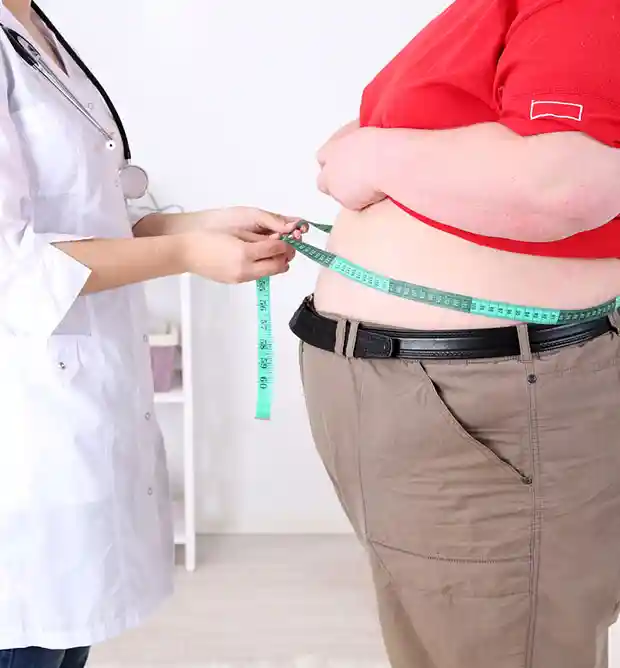
The scale has moved. Your clothes are looser everywhere — except your stomach. It’s one of the most demoralising things after working hard to lose weight, and it makes people wonder what they’re doing wrong. The honest answer is usually: nothing. Here are the six real reasons your stomach can stay big after weight loss, and what actually fixes each one.
It Can Stay Big
Fat, Skin, Muscle
Not Your Fault
Surgical Fix in Turkey
Your stomach can stay big after weight loss for six main reasons: remaining subcutaneous fat, hidden visceral fat, loose skin, separated abdominal muscles, bloating, or simply needing more time. Fat and bloating respond to continued effort; loose skin and separated muscle are structural and don’t, no matter how much weight you lose. When the cause is structural, the only reliable fix is a tummy tuck.
First, Understand the 3 Layers of Your Stomach
To understand why your stomach can stay big, picture it as three distinct layers, from the inside out. Almost every “still big” stomach is a problem in one or more of these — and the reason effort sometimes fails is that people target the wrong layer.
The Deepest Layer: Visceral Fat and Muscle
Deep inside sits visceral fat, wrapped around your organs, plus your abdominal muscle wall. Visceral fat pushes the belly out from within and only responds to overall weight loss. The muscle wall, if separated or weak, lets the whole abdomen bulge forward.
The Middle Layer: Subcutaneous Fat
Above the muscle is subcutaneous fat — the pinchable layer just under the skin. This is the classic “stubborn” fat, often the last to leave the lower belly.
The Outer Layer: Skin
On the surface is the skin. After weight loss, if it’s been stretched too far, it stays loose and drapes — making the stomach look big even when the fat is gone.
The 6 Reasons Your Stomach Stays Big After Weight Loss
Remaining Subcutaneous Fat
The lower belly is often the last place to give up fat. You may simply not be lean enough there yet, even if you look slim elsewhere.
Hidden Visceral Fat
Deep fat around the organs pushes the belly outward and feels firm, not soft. It responds only to continued weight loss — not to surgery.
Loose, Stretched Skin
The big one after major weight loss. The fat is gone but the skin envelope is too large and won’t retract — so the stomach still looks and feels bulky.
Separated Abdominal Muscles
Diastasis recti from pregnancy or weight gain lets the belly bulge forward even at a low body fat. No exercise re-joins a stretched midline.
Bloating and Digestion
A belly that fluctuates through the day and with meals may be distended by gas, intolerance or constipation rather than fat or skin.
It Just Needs More Time
Skin can keep retracting for 6–12 months after weight stabilises. Sometimes the stomach isn’t “done” — it’s still catching up.
Visceral vs Subcutaneous Fat: Why the Difference Matters
If your stomach is still big and the cause is fat, it helps enormously to know which fat. They behave completely differently.
Visceral Fat
This is the deep fat packed around your internal organs. It makes the belly protrude and feel firm rather than soft, and it’s the more concerning type for health. The good news: visceral fat is metabolically active and tends to respond well to diet and exercise. If your firm, round belly is visceral fat, continued weight loss is genuinely the answer — and no surgery can or should remove it.
Subcutaneous Fat
This is the softer, pinchable fat just under the skin. It’s the “stubborn” layer that lingers on the lower belly and responds more slowly. When it’s an isolated pocket on a lean person with firm skin, liposuction can remove it directly — but it’s not a substitute for losing visceral fat first.
If your stomach is large but firm and hard to pinch, it’s more likely visceral fat — keep going with weight loss, because surgery isn’t the tool. If it’s soft and you can grab loose skin or a fatty roll, the cause is in the outer layers, where surgery can help. This single distinction redirects a lot of people toward the right path.
When the Reason Is Loose Skin
This is the most common reason a stomach stays big after significant weight loss. You did everything right, the fat came off — and you’re left with a skin envelope built for a much larger body. It drapes, folds and refuses to shrink, because the elastin that once let it recoil has been stretched past its limit.
No diet, no workout and no cream will retract genuinely loose skin. Getting even leaner often makes it look worse, because there’s less underneath to fill it. The only treatment that removes loose abdominal skin is surgery — a tummy tuck for the stomach, with companion procedures like an arm lift or breast uplift if other areas are affected too.
When the Reason Is Muscle Separation
If your stomach bulges forward — especially low and central — even though you’re slim, the culprit may be your muscle wall, not fat or skin. Pregnancy and prolonged weight gain can separate the abdominal muscles down the midline, a condition called diastasis recti. With the seam between the muscles slack, the abdominal contents push forward and the belly domes outward.
You can test for it: lie down, lift your head, and look for a ridge coning up the centre of your abdomen. If it’s there, no amount of training will fully close it, because exercise can’t rejoin a permanently stretched midline. The repair is surgical — the muscle-tightening step performed inside a tummy tuck — and it’s often the missing piece for people whose stomach “won’t go flat” no matter what.
When the Reason Is Bloating or Simply Time
Two gentler explanations are worth ruling in before assuming the worst.
Bloating
If your belly is flat in the morning and swells through the day, fluctuating with meals, the issue is likely digestive — gas, food intolerance, constipation or water retention. This responds to dietary changes (identifying triggers, more fibre and water, eating slowly) rather than anything surgical. Persistent or painful bloating should be checked by a doctor.
Time
Skin continues to retract for 6–12 months after your weight stabilises. If you’ve only recently hit your goal, your stomach may simply still be catching up. It’s worth supporting that window with protein, hydration, strength training and sun protection before concluding the skin won’t recover — and before considering surgery.
How to Tell Which One Is Yours
What Actually Fixes Each Cause
- Visceral fat: continued, sustainable weight loss — the one surgery can’t and shouldn’t touch.
- Subcutaneous fat (isolated, firm skin): diet, or liposuction if a stubborn pocket remains.
- Loose skin: a tummy tuck — the only way to remove it.
- Muscle separation: muscle repair within a tummy tuck.
- Bloating: dietary and digestive changes.
- Time: patience plus protein, hydration and strength work for 6–12 months.
After major weight loss, many people have two or three of these at once — typically loose skin plus muscle separation plus a little residual fat. That combination is exactly what a tummy tuck, often with liposuction, is designed to address in a single operation.
How a Tummy Tuck Helps When It’s Structural
When loose skin and separated muscle are the reason your stomach stays big, a tummy tuck resolves both at once. The surgeon removes the loose skin through a low, concealed incision, stitches the separated muscles back together to flatten the wall, and re-drapes a smooth, firm contour — frequently adding liposuction to refine the waist. It’s the finishing step that turns a hard-won weight loss into the flat stomach you were picturing all along.
A tummy tuck is for when you’ve done the weight-loss work and structural changes are all that’s left. It’s not a substitute for losing visceral fat, and it works best once your weight has been stable for several months. Think of it as completing the journey, not skipping it.
Cost in Turkey
Many people who’ve lost weight pair a tummy tuck with other skin-removal procedures in one trip, which is far more affordable in Turkey than at home. The savings come from lower hospital and operating costs, not lower standards. Full package detail is on the tummy tuck in Turkey page.
Why Patients Choose Clinic Mono in İzmir
Patients repeatedly say Clinic Mono was where someone finally explained why their stomach stayed big after all their hard work — and gave them a realistic plan rather than a sales pitch.
Honest, Layer-by-Layer Assessment
Your surgeon identifies whether fat, skin or muscle is the issue and recommends only what genuinely helps — including telling you if more weight loss should come first.
Board-Certified Surgeons, Accredited Hospital
High-volume, experienced plastic surgeons who handle post-weight-loss bodies every week, operating in a fully accredited hospital.
All-Inclusive, English-Speaking Care
One transparent price covering surgery, hotel, transfers and aftercare, with English-speaking support throughout and after you return home.
I lost four stone and couldn’t understand why my stomach still looked the same — it was crushing. Clinic Mono showed me it was loose skin and a muscle separation, neither of which I could exercise away. The tummy tuck finally let me see the body I’d worked so hard for. Genuinely the best money I’ve ever spent.
Mistakes That Keep Your Stomach Looking Big
If your stomach has stayed big despite real effort, one of these common traps may be the reason — and spotting it can change everything.
Assuming It Must Be Fat
The default assumption is always “more fat to lose,” so people double down on dieting. But after significant weight loss, the cause is often loose skin or separated muscle — and dieting harder does nothing to those. Identifying the true cause first prevents months of misdirected effort.
Crash Dieting and Losing Muscle
Aggressive, low-protein dieting strips muscle as well as fat, leaving the midsection looking softer and, where skin is loose, saggier. Steady fat loss with enough protein produces a flatter, firmer stomach than rapid weight loss ever does.
Judging Your Skin Too Soon
Skin keeps retracting for 6–12 months after your weight settles. Concluding it “won’t tighten” at three months — and either giving up or rushing into surgery — is premature. Give the skin its window first.
Endless Ab Workouts for a Structural Problem
Crunches and planks build muscle, but they can’t close separated abdominal muscles or remove loose skin. If the cause is structural, more ab work simply isn’t the lever — and recognising that is the first step toward the solution that is.
Glossary
Frequently Asked Questions
Worked Hard but the Stomach Won’t Budge? Find Out Why
Send clear photos via WhatsApp and our plastic surgeons will tell you honestly whether it’s fat, loose skin or muscle separation — and what would actually fix it. No obligation, no pressure.