Self-conscious about the gap between your front teeth but don’t want two years of braces? You’re not alone — a gap (a “diastema”) is one of the most common reasons people hide their smile. This honest guide explains what causes a gap, whether you even need to close it, every way to fix it, and the fastest permanent option that closes the gap and perfects your whole smile at once.
The Medical Name
Veneer Route
Often All It Takes
One Trip
A gap between the front teeth (a diastema) can be closed without braces using composite bonding or, for a faster and more complete result, dental veneers — thin shells bonded over the teeth that close the gap and reshape and brighten the whole smile at once. Braces or clear aligners can also move the teeth together over 6–18 months, but many adults choose veneers because the gap is gone in days, not years. If a missing tooth is causing the gap, an implant or bridge is needed instead. The right option depends on why you have the gap and how quickly you want it fixed.
What Is a Gap in the Teeth?
A gap between two teeth — most noticeably the two upper front teeth — is called a diastema. It’s extremely common: some people have a small gap they barely notice, while others have a wider space that becomes the thing they see first in every photo. It can appear anywhere in the mouth, but the midline diastema between the central incisors is the one people most want to address, because it sits right in the middle of your smile.
A gap is not a disease and it’s not “wrong” — plenty of people wear one proudly. But if yours makes you cover your mouth when you laugh or edit it out of pictures, that’s a good enough reason to look at your options. The key first step is understanding why you have it, because the cause partly decides the best way to close it.
What Causes a Gap Between the Teeth?
Gaps form for several different reasons, and often more than one is involved:
Teeth-to-Jaw Size Mismatch
If your teeth are small relative to your jawbone, there’s simply extra space — and it tends to show up between the front teeth. This is largely genetic.
A Large Labial Frenum
The small band of tissue between your upper lip and gum can be oversized and push the front teeth apart, holding a gap open.
Missing or Small (Peg) Teeth
A missing tooth lets neighbours drift apart, and undersized “peg” lateral teeth leave spaces on either side of the front teeth.
Habits & Gum Health
Childhood thumb-sucking, tongue-thrust swallowing and, in adults, gum disease that lets teeth shift can all open or widen a gap.
If your gap is from small teeth, veneers or bonding “build the teeth out” to fill it beautifully. If it’s from gum disease or a missing tooth, that has to be treated first — which is exactly why a proper assessment comes before any cosmetic work.
Should You Close the Gap At All?
Let’s be balanced about this: a gap is a feature, not a flaw, and many people love theirs — it can look characterful and distinctive. There’s no health requirement to close a small, stable gap with healthy gums. So the honest answer is: only close it if it bothers you.
That said, if you find yourself hiding your smile, feeling self-conscious in photos or at work, or you’ve simply never liked it, that’s a completely valid reason to fix it — and modern cosmetic dentistry can close it so naturally that no one would know it was ever there. The goal isn’t a “perfect” identical smile; it’s a smile you feel good about. The rest of this guide assumes you’d like it closed and walks through exactly how.
Every Way to Close a Gap in Your Teeth
There are four main routes, and the best one depends on the cause, the size of the gap, your budget and how fast you want it done.
1. Braces or Clear Aligners (Invisalign-type)
Orthodontics physically moves the teeth together to close the gap. It’s the most conservative option because nothing is added to or removed from the teeth, and it’s ideal when there are several spacing issues or a bad bite to correct too. The trade-offs: it takes months to a couple of years, and once the teeth are moved you must wear a retainer for life or the gap can slowly reopen.
2. Composite Bonding
The dentist adds tooth-coloured resin to the sides of the teeth to fill the gap, sculpting and polishing it to blend in. It’s quick (often one visit), affordable and needs little or no enamel removed — but composite is less stain-resistant and less durable than porcelain, so it may need touch-ups or replacing every few years.
3. Porcelain Veneers
Thin porcelain shells are bonded over the front of the teeth, closing the gap while also perfecting the colour, shape and alignment of the whole smile. It’s fast (usually one trip), extremely natural-looking with E-max porcelain, and long-lasting — the reason it’s the most popular gap solution for adults who want a complete result rather than just filling the space. More on this below.
4. Crown, Bridge or Implant
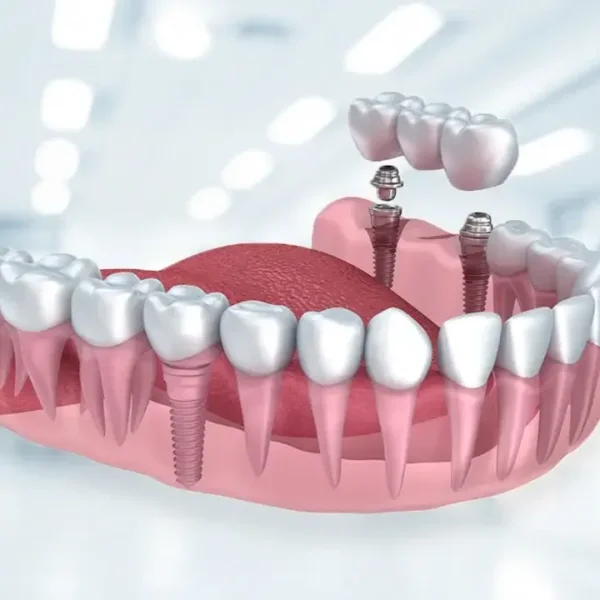
If the gap is caused by a missing tooth, closing it means replacing the tooth — usually with a dental implant or a bridge — rather than just covering a space. A badly broken-down tooth beside a gap may instead need a crown. Your dentist will identify this at assessment.
The Gap-Closing Options Compared
Closing a Gap Without Braces — Realistically
Most people searching for how to close a gap specifically want to avoid braces, and the honest news is good: for a typical front-tooth gap in healthy teeth, you have two excellent no-braces routes — composite bonding and porcelain veneers. Both close the space in days rather than months, without any brackets or aligners.
What you should ignore are the “DIY gap closing” ideas that circulate online — elastic bands, “gap bands” or filing your own teeth. These are genuinely dangerous: bands can slide under the gum and destroy the bone that holds the teeth, causing you to lose the very teeth you were trying to improve. Closing a gap safely and permanently is a job for a dentist, and thankfully the professional options are quick and affordable.
Bonding vs Veneers for a Gap: Which Is Right?
This is the real decision for most people, so here’s the honest comparison.
Composite Bonding
- →Cheapest and quickest (often one visit)
- →Little or no enamel removed — reversible
- →Can stain and chip; lasts a few years
- →Great for a small gap on a budget
Porcelain Veneers
- →Closes the gap and transforms the whole smile
- →Stain-resistant and very natural (E-max)
- →Long-lasting (10–15+ years)
- →Best when you also want colour/shape improved
In short: if you only want a small gap filled cheaply and reversibly, bonding is a great choice. If you want the gap gone and a brighter, more even smile that lasts for years, veneers are usually the better investment — which is why so many people combine the two goals in one treatment.
Why Veneers Are So Popular for Closing Gaps
Veneers have become the go-to for gaps because they solve more than one problem at once. Rather than only filling the space, a set of dental veneers lets the dentist redesign the width, length, colour and alignment of the front teeth together — so the gap disappears and the whole smile looks even and bright.
- Fast: the gap is gone in days, not the months braces take.
- Complete: closes the gap while also fixing stains, chips, small teeth and minor crookedness in the same treatment.
- Natural: genuine E-max porcelain has a lifelike translucency, so a well-made veneer is undetectable.
- Durable: porcelain veneers typically last 10–15 years or more and don’t discolour like natural teeth.
For someone with a gap plus teeth they’ve never quite loved, this “fix everything at once” quality is exactly the appeal. If you want the full picture on materials, cost and the process, our complete guide to veneers in Turkey covers it in depth, and a wider transformation of the whole smile is what’s known as a Hollywood smile.
Closing a single front gap often means veneers on just the two central teeth, sometimes four for a balanced result. A good dentist won’t talk you into a full set you don’t need — the most natural result often blends a few veneers with your own teeth.
If a Missing Tooth Is Causing the Gap
One important exception: if your gap exists because a tooth is missing, veneers and bonding aren’t the answer on their own — you can’t bond a space closed where a tooth should be without making the neighbouring teeth look too wide. In that case the gap is closed by replacing the tooth, most often with a dental implant (a permanent titanium root plus a crown) or a bridge. Veneers can then be added to the surrounding teeth if you also want to refine their colour and shape. This is why an honest assessment always comes first — you can see the full range of options on our cosmetic dentistry in Turkey page.
Veneers in Turkey: What It Costs
Cost is the main reason so many patients from the UK, Ireland and the US travel to close a gap and transform their smile in Turkey. The same genuine E-max porcelain and digital techniques cost a fraction of Western prices, because clinic and lab costs are far lower — not because quality is.
*Clinic Mono full-set price is all-inclusive of hotel, VIP transfers and aftercare. Western prices are typically for the dentistry alone. Closing a single gap usually needs only 2–4 veneers, quoted individually.
Because closing a gap often needs only two to four veneers, the treatment can be surprisingly affordable — and it’s completed in one 5–7 day trip. Full detail is on our veneers in Turkey page.
Why Patients Choose Clinic Mono in İzmir
Clinic Mono is a trusted choice for closing gaps and designing natural smiles, and the feedback from international patients is consistently positive — especially about how conservative the dentists are with the natural teeth, and how natural (not “fake white”) the results look.
Experienced Cosmetic Dentists
Your smile is designed and fitted by experienced cosmetic dentists in a modern, accredited clinic, using digital smile design and genuine E-max.
Conservative, Enamel-Sparing Approach
We recommend the least invasive option that closes your gap — bonding, a couple of veneers, or a referral for orthodontics if that genuinely suits you better.
All-Inclusive, English-Speaking Care
Treatment, hotel, VIP transfers and aftercare in one transparent price, with English-speaking support from your first message onwards.
I’d had a gap in my front teeth my whole life and hated it in photos, but I really didn’t want braces in my thirties. Clinic Mono closed it with just four E-max veneers over a week in İzmir — it looks completely natural and they matched the colour to my other teeth perfectly. I finally smile with my teeth showing.
Are You a Candidate for Closing Your Gap?
Veneers/Bonding May Suit You If…
- →Your gap is from small teeth or spacing, not a missing tooth
- →Your teeth and gums are healthy
- →You want it closed quickly, without braces
- →You’d also like a brighter, more even smile
Address First If You…
- →Have gum disease or decay (treated before cosmetic work)
- →Have a gap from a missing tooth (needs an implant/bridge)
- →Have a large bite problem better suited to orthodontics
- →Grind heavily (a night guard may be advised)
Send a clear photo of your smile and we’ll tell you honestly what’s causing your gap and the best way to close it — bonding, veneers or, if it’s the right call, a referral for braces. No pressure, no upselling.
Glossary
Frequently Asked Questions
Want Your Gap Closed Without Braces? Get a Free Assessment
Send a clear photo of your smile via WhatsApp and our dental team will reply within 24 hours with an honest assessment of what’s causing your gap, the best way to close it, and a transparent all-inclusive price. No obligation, no pushy follow-ups.