Cosmetic Dentistry · Updated for 2026
Everything UK, EU and US patients need to know before booking a dental bridge in Turkey — transparent prices, all bridge types explained, the 5–7 day procedure timeline, recovery, materials and what’s included with Clinic Mono’s all-inclusive packages in İzmir.
Quick Answer
A dental bridge in Turkey costs between £150 and £250 per unit, with a standard 3-unit zirconia bridge starting at £600 — up to 75% less than UK private prices. Treatment is completed in 5–7 days in İzmir, including consultation, custom crafting and final fitting. Clinic Mono’s all-inclusive packages cover hotel, VIP transfers, X-rays and aftercare, backed by a 10-year warranty.
What Is a Dental Bridge?
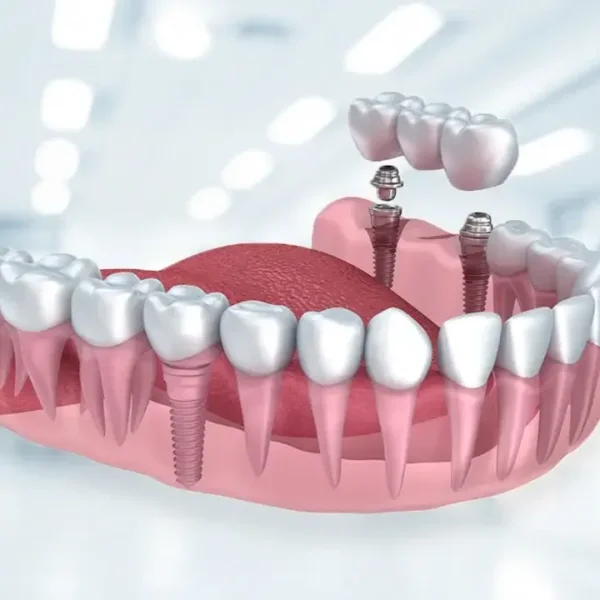
A dental bridge is a fixed dental restoration that replaces one or more missing teeth by literally “bridging” the gap. It is made up of crowns called abutment crowns that sit over the healthy teeth on either side of the gap, and one or more artificial teeth called pontics suspended between them to fill the empty space.
Unlike removable dentures, a bridge stays in your mouth permanently — you brush, eat and sleep with it just as you would your natural teeth. Once cemented, most patients forget it’s even there.
Anatomy of a Dental Bridge
Every dental bridge is made of four core components, regardless of type:
The pontic doesn’t have a root — instead, it “floats” above the gum, supported entirely by the abutments on either side via the connectors. This is why the materials, fit and bite balance of a bridge matter so much: the entire restoration is essentially carried by the two anchor teeth.
Signs You May Need a Dental Bridge
Not sure whether a dental bridge is right for you? You may benefit from one if you have any of the following:
- A visible gap in your smile from one or more missing teeth
- Difficulty chewing on one side of your mouth
- A whistling or lisping sound when you speak
- Drifting, tilting or rotating of the teeth next to a missing one
- A sunken or aged appearance in the cheek over the missing tooth area
- Frequent food trapping in the gap
- Headaches or jaw pain from an uneven bite
- Loss of confidence in your smile when speaking or laughing
Leaving missing teeth untreated isn’t just an aesthetic issue — adjacent teeth gradually shift into the empty space, opposing teeth can over-erupt, and the jawbone in the empty area slowly shrinks. The earlier you address a gap, the simpler and more successful the treatment.
Types of Dental Bridges
There are four main types of dental bridges, each suited to a different clinical situation. The right choice depends on the position of the missing tooth, the health of neighbouring teeth, your budget, and how long you want the restoration to last.
Traditional Bridge
The most common type. A traditional bridge uses two crowns cemented onto the healthy teeth on either side of the gap, with one or more pontics in between. Best for back teeth where chewing forces are highest. Requires both abutment teeth to be reshaped to receive the crowns.
Cantilever Bridge
Used when you only have one healthy abutment tooth next to the gap — the pontic is supported on a single side, like a cantilever balcony. Most often placed on front teeth where chewing pressure is lower. Not recommended for back molars under heavy bite force.
Maryland (Resin-Bonded) Bridge
The most conservative option. Instead of crowning the abutment teeth, thin metal or porcelain wings are bonded to the backs of the neighbouring teeth. Minimal preparation, fully reversible in many cases, and ideal for replacing a missing front tooth — particularly in younger patients with healthy adjacent teeth.
Implant-Supported Bridge
For patients missing several teeth in a row with no healthy abutments, two or more dental implants are placed in the jawbone first, and a bridge is then fixed on top of them. This is the most durable option — often lasting 20+ years — but requires a longer treatment timeline (3–6 months total, usually over two trips to İzmir).
Dental Bridge Materials Compared
The material your bridge is made from determines how natural it looks, how strong it is, how long it lasts, and how much it costs. At Clinic Mono we offer four material options — all CE-marked and FDA-approved, identical to those used in top UK and European dental clinics.
Zirconia (Our Most Popular Choice)
Zirconia is a metal-free, tooth-coloured ceramic that’s actually stronger than your natural enamel. It resists staining, looks natural in every type of lighting, and is completely biocompatible — making it ideal for patients with metal allergies or sensitivities. Best all-round option for both front and back teeth.
E-Max (Lithium Disilicate)
A premium glass-ceramic prized for its translucency. Light passes through E-Max much like it does through natural enamel, making it the gold standard for front teeth where appearance matters most. Slightly less robust than zirconia under heavy chewing forces, so it’s usually reserved for visible smile-zone restorations.
Porcelain-Fused-to-Metal (PFM)
A long-trusted option that’s been used in dentistry for over 50 years. A metal substructure provides strength while a porcelain coating gives a tooth-like appearance. Excellent for back teeth and patients who need maximum durability on a tighter budget.
Metal-Supported (NPM / Cr-Co)
The most affordable bridge option, made from non-precious metal or chrome-cobalt alloys. Extremely strong and incredibly long-lasting — but not aesthetic, so we recommend metal-only bridges exclusively for non-visible back teeth.
Dental Bridge vs Partial Denture
Many patients consider a removable partial denture as an alternative to a fixed bridge. Both replace missing teeth, but the day-to-day experience is very different. Here is an honest comparison.
Most patients who can afford a fixed solution choose a bridge over a partial denture. Dentures remain a valid option for very specific cases — extreme bone loss, very tight budgets, or as a temporary solution before implants.
Dental Bridge Cost in Turkey (2026 Prices)
Dental bridges in Turkey cost up to 75% less than in the UK, EU or US — without compromising on materials, technology, sterilisation standards or dentist qualifications. Below are Clinic Mono’s transparent 2026 prices per unit, with no hidden fees.
- ✓ Metal base + porcelain coating
- ✓ Best for back teeth
- ✓ 8–10 year lifespan
- ✓ Most affordable option
- ✓ Premium metal-free ceramic
- ✓ Natural translucency
- ✓ 15+ year lifespan
- ✓ Allergen-free, biocompatible
- ✓ Works for all teeth
- ✓ Best front teeth aesthetics
- ✓ Lithium disilicate ceramic
- ✓ Glass-like translucency
- ✓ 10–12 year lifespan
Why Are Bridges Cheaper in Turkey?
It’s a fair question — and the answer has nothing to do with quality. Operating costs in Turkey are simply much lower: lab fees, clinic rent, staff salaries and overheads are 60–80% below UK levels. Turkey also has one of the largest pools of European-trained dentists per capita, and the lira’s exchange rate works in favour of patients paying in pounds or euros. The result: the same materials, the same procedure, the same standard of care — at a fraction of the price.
International Cost Comparison (3-Unit Zirconia Bridge)
NHS Band 3 vs UK Private vs Clinic Mono
UK patients often ask whether NHS dental coverage makes Turkey unnecessary. Here is the honest comparison:
*NHS Band 3 charge for England, 2025/26. Wales, Scotland and Northern Ireland have different schemes.
For most UK patients, a return flight to İzmir costs £80–£180. Even adding the flight, you still save £1,200–£2,500 compared to UK private — and end up with a higher-grade material than the NHS provides.
What’s Included (and What’s Not)
Hidden costs are one of the biggest complaints in dental tourism. Here is a complete, honest breakdown of exactly what’s included in your Clinic Mono package — and what you’ll need to budget separately.
✓ Included in Your Package
- ✓Your full dental treatment
- ✓4-star hotel for 6–7 nights
- ✓VIP private airport transfers
- ✓All X-rays and scans
- ✓Pre-treatment consultation
- ✓Local anaesthesia
- ✓Temporary bridge
- ✓Post-treatment check-up
- ✓10-year written warranty
- ✓English-speaking coordinator 24/7
- ✓Hotel breakfast
✕ Not Included (Budget Separately)
- ✕International flights (£80–£180)
- ✕Travel insurance
- ✕Turkish e-visa (£20)
- ✕Lunches and dinners
- ✕Optional tourist activities
- ✕Personal shopping
- ✕Unrelated dental work
- ✕Bone grafting (rare)
- ✕Companion’s accommodation
Want a personalised quote for your case?
Send us a photo of your teeth — we’ll reply with a custom plan and exact price within 24 hours.
The Dental Bridge Procedure: Step-by-Step
Most dental bridges at Clinic Mono are completed across two main appointments over 5–7 days in İzmir. Here is exactly what happens at each step of your treatment.
Initial Consultation & Digital X-Ray
Your dentist examines your teeth, takes a panoramic X-ray and 3D scan to assess the abutment teeth, bone level and any underlying issues. You’ll discuss material options, expected results and your full quote.
Day 1 · 60 minutes
Tooth Preparation
Under local anaesthesia, the abutment teeth are gently and precisely shaped to receive the bridge. The process is painless and uses modern, high-speed instruments for accuracy.
Day 1 · 90 minutes
Digital Impressions (Intraoral Scan)
We use modern intraoral scanners to capture your bite digitally in 3D — no uncomfortable putty trays, no gagging. The design is sent immediately to our in-house dental lab.
Day 1 · 20 minutes
Temporary Bridge Fitted
You leave the clinic with a temporary bridge that protects the prepared teeth and lets you eat, speak and smile normally while your custom bridge is being crafted.
Day 1 · 30 minutes
Custom Bridge Crafted (CAD/CAM)
Our master technicians design and mill your bridge from zirconia, E-Max, PFM or metal — colour-matched to your natural teeth and individually shaped to your bite. Most bridges are ready in 2–4 days.
Days 2–5
Permanent Bridge Cementation
Final fit check, bite adjustments and aesthetic review with you in the chair — then the bridge is permanently cemented with medical-grade adhesive. You leave with a complete, natural-looking smile.
Day 6 · 60 minutes
For implant-supported bridges, the timeline extends to 3–6 months because the implants need to osseointegrate (fuse with the jawbone) before the final bridge can be placed. We typically schedule two trips: one for implant placement and a temporary restoration, and one for the final bridge fitting.
Same-Day Dental Bridges: Are They Real?
Modern CAD/CAM technology has made it possible to design, mill and fit certain dental bridges in a single day. But “same-day bridges” come with important caveats — and aren’t suitable for every case.
At Clinic Mono, our in-house digital lab uses state-of-the-art CEREC and 5-axis milling equipment. This means we can offer the following accelerated pathways:
- Same-day temporary bridges — Standard for every patient, fitted on Day 1.
- 2-day E-Max bridges — Possible for single-unit or 2-unit Maryland bridges with minimal preparation.
- 3–5 day zirconia bridges — Our standard pathway; quality requires lab time.
- Implant-supported bridges — Still require 3–6 months due to bone integration.
Dental Bridge vs Dental Implant: Which Is Better for You?
This is the most common question we hear from patients researching tooth replacement options — and the honest answer is “it depends.” Both options are excellent in the right circumstances. Here is a side-by-side comparison so you can make an informed decision.
Choose a Bridge If…
- ✓You want faster treatment (1 week)
- ✓Neighbouring teeth need crowns anyway
- ✓Your budget is tighter
- ✓You can’t have surgery
- ✓You’re a smoker or have diabetes
Choose an Implant If…
- ✓You want the longest-lasting solution
- ✓You want to preserve jawbone
- ✓Neighbouring teeth are healthy
- ✓Only 1–2 non-adjacent missing
- ✓You’re in good health, non-smoker
For patients with multiple missing teeth in a row, an implant-supported bridge often offers the best of both worlds — implant durability with bridge efficiency. Learn more in our complete guide to dental implants in Turkey.
Why Choose Clinic Mono for Your Dental Bridge?
There are dozens of dental clinics in Turkey offering bridges. Here is what genuinely sets Clinic Mono apart — and why thousands of international patients have chosen us since 2018.
Meet Your Dental Team
Dt. Çağrı Dereli
Senior Cosmetic Dentist · DDS
12+ years specialising in dental bridges, crowns and full-mouth restoration. Lead medical reviewer for Clinic Mono’s cosmetic dentistry content.
Dt. Burak Anıl Sarp
Cosmetic & Restorative Dentist
Specialist in zirconia restorations and digital smile design. Trained in Istanbul and Munich, with a focus on aesthetic anterior bridges.
Our All-Inclusive Promise
When you book a dental bridge with Clinic Mono, you don’t just get the treatment — you get a complete, stress-free experience covered by four signature services:
All-Inclusive Treatment Package
Hotel stay, all transfers, X-rays, treatment, follow-up appointments and aftercare — included. You only buy your flight.
24/7 Patient Support
A dedicated English-speaking coordinator is available on WhatsApp around the clock, before, during and after your visit.
VIP Transfer & Mono Aftercare Villa
Private chauffeur from İzmir Airport, plus the option of staying in our dedicated aftercare villa with 24/7 medical consultant.
Free Online Treatment Plan
Send us photos of your teeth and a personalised plan — including bridge type, material, timeline and price — arrives within 24 hours.
Why İzmir? The Aegean Dental Capital
Most dental tourism conversations focus on Istanbul or Antalya, but İzmir has quietly become Turkey’s premier destination for serious dental work.
What makes İzmir special:
- Less tourist-crowded — Unlike Istanbul or Antalya, you can recover in peace.
- Direct flights from Manchester, Stansted, Gatwick, Birmingham, Edinburgh, Bristol, Cologne, Frankfurt, Amsterdam, Brussels and Dublin.
- Beautiful Aegean coastline — Çeşme’s beaches, Şirince’s wine village, and ancient Ephesus within an hour’s drive.
- Lower hotel costs than Istanbul — premium 4-star hotels at 3-star prices.
- Modern medical district — Multiple JCI-accredited hospitals within easy reach.
Your Journey: 5–7 Days in İzmir
Once you book your flight to İzmir, every detail of your trip is taken care of. Here is what a typical 7-day dental bridge journey with Clinic Mono looks like:
Day 1 — Arrival & Welcome
VIP transfer from İzmir Adnan Menderes Airport to your hotel. Welcome pack, local SIM card and a relaxing first evening to settle in.
Day 2 — Consultation, X-Rays & Tooth Preparation
Morning consultation with Dt. Dereli, full digital X-ray, tooth preparation and temporary bridge fitted. Afternoon: free time to recover.
Days 3–5 — Crafting & Free Time
Our lab crafts your bridge. You’re free to explore İzmir’s Aegean coastline, visit Ephesus, relax in Çeşme, or simply enjoy your hotel.
Day 6 — Final Fitting
Try-in appointment, bite adjustments, colour and shape review with you in the chair, then permanent cementation. Your new smile is complete.
Day 7 — Follow-Up & Departure
Final follow-up appointment, written aftercare plan and warranty documents, then VIP transfer back to the airport.
What to Pack: Your Turkey Dental Trip Checklist
Preparing for dental work abroad doesn’t need to be complicated. Use this checklist to make sure you arrive ready for everything:
Travel Essentials
- ☐Passport (valid 6+ months)
- ☐Turkish e-visa
- ☐Travel insurance documents
- ☐Flight booking confirmation
- ☐Some Turkish lira for tips
- ☐UK/EU plug adapter (Type F)
For Your Treatment
- ☐Previous X-rays or dental records
- ☐List of current medications
- ☐List of allergies
- ☐Questions for the dentist
- ☐Reading glasses if needed
Recovery Items
- ☐Painkillers
- ☐Soft toothbrush
- ☐Lip balm
- ☐Comfortable clothing
- ☐Reusable water bottle
Comfort & Leisure
- ☐Headphones / earbuds
- ☐Tablet or e-reader
- ☐Books for downtime
- ☐Swimsuit
- ☐Walking shoes
- ☐Sun cream
Recovery and Aftercare
Recovery from a traditional dental bridge is typically quick and comfortable. Here is what to expect at each stage.
First 24 Hours
Mild tenderness in the abutment teeth is normal as the local anaesthesia wears off. Stick to soft, lukewarm foods — soups, mashed potato, scrambled eggs, smoothies. Take paracetamol or ibuprofen if needed. Avoid alcohol completely, and don’t smoke for at least 48 hours.
First Week
Gradually reintroduce regular foods. Continue to avoid sticky and chewy foods. Brush gently around the new bridge with a soft toothbrush. Begin flossing underneath the bridge using super-floss or a water flosser.
Long-Term Care
- Brush twice daily with fluoride toothpaste
- Floss daily — paying special attention to under-bridge cleaning
- Use an interdental brush around the abutment crowns
- Schedule a dental check-up every 6 months
- Wear a night guard if you grind your teeth
- Avoid using your bridge to open packaging or crack hard items
Foods to Eat (and Avoid) With a Dental Bridge
What you eat — especially in the first few days — has a direct impact on how comfortable your recovery is and how long your bridge lasts.
✓ Safe Foods (First 48 Hours)
- ✓Soups (lukewarm)
- ✓Mashed potato
- ✓Scrambled eggs
- ✓Yogurt and smoothies
- ✓Avocado
- ✓Soft pasta
- ✓Steamed white fish
- ✓Ripe bananas
- ✓Porridge / oatmeal
✕ Foods to Avoid
- ✕Hard nuts and seeds
- ✕Chewing gum, toffee
- ✕Crusty bread, popcorn
- ✕Raw carrots, celery
- ✕Very hot drinks
- ✕Iced/very cold drinks
- ✕Alcohol
- ✕Sticky dried fruits
- ✕Tough red meat
After two weeks, most foods are safe again — but always avoid using your bridge to open packaging, crack ice, or chew bones.
How Long Does a Dental Bridge Last?
The lifespan of a dental bridge depends mostly on the material, your oral hygiene, and your bite forces:
- PFM (Porcelain-Fused-to-Metal): 8–10 years
- Zirconia: 15+ years
- E-Max: 10–12 years
- Metal-supported: 15+ years
- Implant-supported bridge: 20+ years
Factors that can shorten the lifespan of a dental bridge include teeth grinding (bruxism), poor oral hygiene, smoking, a high-sugar diet, untreated gum disease, and using teeth as tools.
Risks and Potential Complications
Honesty matters in healthcare. While dental bridges have an excellent long-term success rate (over 89% at 10 years, according to the American Dental Association), it’s important to understand the potential risks:
- Decay under the abutment teeth — If oral hygiene is inconsistent, bacteria can accumulate at the crown margins.
- Gum recession — The gum line around the abutment crowns may recede slightly over time.
- Bridge debonding — In rare cases the bridge may come loose; a re-cement is usually a simple in-chair procedure.
- Sensitivity — Mild temperature sensitivity in the first few weeks is normal.
- Abutment tooth fracture — Very rare, but possible under extreme biting forces.
At Clinic Mono, we minimise these risks through digital impressions, premium materials, expert cementation, and a comprehensive 10-year warranty.
Signs Your Dental Bridge May Be Failing
Contact Clinic Mono or your local dentist if you notice:
- Persistent pain or sensitivity in the abutment teeth
- A “loose” or shifting feeling when you bite
- Bad taste or odour from under the bridge
- Visible cracks, chips or wear on the bridge surface
- Gum recession exposing a metal edge
- Difficulty cleaning underneath the pontic
- A change in your bite — feeling like one side is “off”
- Swelling or bleeding gums around the bridge
Most issues are easily resolved if caught early. Our 10-year warranty covers material defects, debonding and craftsmanship issues.
How to Choose a Dental Clinic in Turkey: 7-Point Checklist
Use this checklist to evaluate any clinic — including Clinic Mono — before you commit.
Ministry of Health Accreditation
Look for an “International Health Tourism” licence number. Clinic Mono: licence 11898.
Verified Patient Reviews
Minimum 4.5★ rating with 100+ verified reviews on Trustpilot, Google or RealSelf.
Named Dentists with Credentials
Published profiles with DDS/DMD qualifications and professional memberships.
Transparent Pricing
Clear written quotes. Avoid clinics that won’t quote until you arrive.
CE-Marked / FDA-Approved Materials
Ask which brands: Straumann, Nobel Biocare, Ivoclar, 3M, etc.
Real Written Warranty
Minimum 5-year warranty, ideally 10. Get warranty terms in writing.
Aftercare Support
Ongoing contact, digital records and clear warranty claim instructions after you return home.
Red Flags: Warning Signs of an Unsafe Clinic
Walk away — without hesitation — if a clinic exhibits any of these warning signs:
- High-pressure sales tactics or “limited-time discount” countdowns
- Refuses to quote prices before you arrive in Turkey
- Insists on cash-only payments with no receipt
- Uses generic “our team” rather than named dentists
- Cannot show you genuine before-and-after photos
- Won’t share their accreditation number
- Promises that sound too good to be true
- Uses AI-generated stock photos
- No aftercare plan or warranty
- Difficult to find a working phone or address
- Reviews only on their own site, no Trustpilot
- Vague answers about materials or implant brands
Will Your UK or EU Dentist Accept Our Work?
This is one of the most common worries — and the answer is a clear yes. The materials, techniques and standards we use at Clinic Mono are identical to those used in UK, German, Dutch and Irish private clinics.
Every Clinic Mono patient receives:
- A complete digital treatment record — X-rays, intraoral scans, shade records and material certificates
- A 10-year international warranty card
- Manufacturer documentation for all materials
- Direct communication line with your local dentist if questions arise
UK, German and Irish dentists can perform routine check-ups, adjustments and follow-up work on Clinic Mono bridges exactly as they would with locally-fitted restorations.
What Our Patients Say
Honestly the best decision I’ve made. The team was so kind, the hotel was beautiful, and my zirconia bridge looks better than my original teeth ever did. Saved over £2,000 compared to my UK quote.
From the airport pickup to the final fitting, everything was perfect. Dr Dereli explained every step in clear English. My local dentist back in Hamburg said the work was excellent.
I was nervous about going abroad for dental work, but Clinic Mono made me feel completely at ease. The clinic is spotless, the staff is professional, and the result is honestly life-changing.
I researched 15+ clinics in Turkey before choosing Clinic Mono. Transparent pricing, doctor’s credentials and Trustpilot reviews convinced me. Two zirconia bridges, total under £1,200, total time 6 days.
Dental Bridge Glossary
A quick reference for the dental terms used in this guide.
Frequently Asked Questions
Ready to Transform Your Smile?
Get a free, personalised treatment plan and exact price within 24 hours. No obligation, no fees.