The internet is full of creams, oils and serums promising to “erase” stomach stretch marks. The truth is more nuanced — and more useful. This evidence-based guide explains what stretch marks actually are, what treatments genuinely fade them, what’s a waste of money, and the one situation where they can be removed entirely.
Not Just Marks
Red vs White
What Creams Do
With a Tummy Tuck
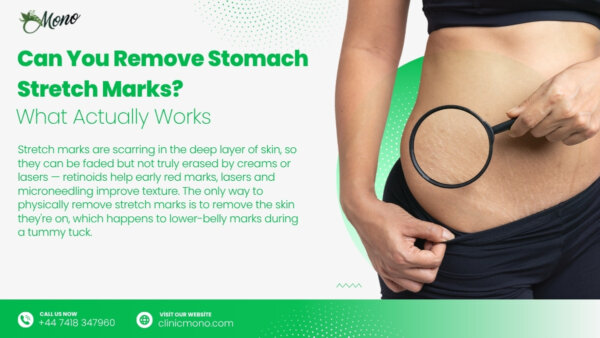
Stretch marks are a form of scarring in the deep layer of skin, so they can be faded and improved but not truly “erased” by creams or lasers. Topicals like retinoids help early red marks; lasers and microneedling improve texture and colour over time. The only way to physically remove stretch marks is to remove the skin they’re on — which is exactly what happens to lower-belly stretch marks during a tummy tuck.
What Stretch Marks Actually Are
Stretch marks — medically, striae — are not surface stains or pigment problems. They are a form of scarring that occurs in the dermis, the deep middle layer of your skin. When skin is stretched faster than it can produce new collagen and elastin — during pregnancy, growth spurts or rapid weight change — the dermis tears at a microscopic level. The body repairs the tear with scar tissue, which looks and behaves differently from the surrounding skin.
This is the crucial fact the cream adverts gloss over: because stretch marks are scars in the deep skin, you cannot wash, rub or moisturise them away from the surface. Anything that genuinely improves them has to act on that deeper layer — and even then, the goal is to make them fade and blend, not to make them vanish completely. Setting that expectation upfront saves a lot of money and disappointment.
Red vs White Stretch Marks: Why the Stage Decides Everything
Stretch marks go through two stages, and which stage yours are in largely determines how treatable they are.
Striae Rubra (Red/Purple)
The early, fresh stage. Marks are red, pink or purple because blood vessels are still present. This is when they respond best to treatment — the skin is still actively remodelling, so creams and lasers can have a real effect.
Striae Alba (White/Silver)
The mature stage. Marks have faded to white or silver and the tissue is settled, flattened scar. These are much harder to improve — treatments help texture and tone modestly, but old white marks rarely disappear.
If your stretch marks are still red or purple, that’s the window to act — topical and laser treatments work far better before the marks turn white. If they’ve already faded to silver, manage your expectations: improvement is possible, but complete fading is unlikely without removing the skin itself.
What Causes Stretch Marks
The common factor is rapid stretching of the skin combined with hormonal influences that affect collagen. The main triggers:
- Pregnancy — the classic cause, as the abdomen expands quickly and pregnancy hormones soften connective tissue.
- Rapid weight gain or loss — including with GLP-1 medications or after bariatric surgery.
- Growth spurts in adolescence — common on the stomach, thighs and back.
- Muscle gain — rapid bodybuilding can stretch skin faster than it adapts.
- Genetics and hormones — if your mother had them, you’re more likely to; high cortisol (natural or from medication) weakens skin’s elasticity.
None of these are within your full control, and having stretch marks is extremely common — the majority of women who’ve been pregnant have some. They’re a normal mark of the body changing, not a flaw, though it’s entirely understandable to want to reduce or remove them.
Can You Really “Erase” Stomach Stretch Marks?
Honestly? No treatment erases them — and any product claiming to should be treated with scepticism. Because stretch marks are scars in the deep dermis, the realistic goals are to fade their colour, soften their texture, and blend them closer to the surrounding skin so they’re far less noticeable. For early red marks, that improvement can be substantial. For old white marks, it’s usually modest.
The single exception is mechanical: if the skin bearing the stretch marks is physically removed, the marks go with it. That doesn’t apply to scattered marks across the whole abdomen, but it applies completely to the lower belly — which is why a tummy tuck is the only intervention that genuinely removes stretch marks rather than fading them. Everything else manages their appearance.
Creams and Oils: What Actually Works (and What Doesn’t)
Worth Trying (Early Marks)
- Topical retinoids (tretinoin) — the best-evidenced topical, shown to improve early red stretch marks by stimulating collagen. Prescription-strength; not for use in pregnancy.
- Hyaluronic acid — some evidence for improving early marks when applied consistently.
- Daily moisturising — won’t remove marks, but well-hydrated skin looks better and massage may help slightly during the early stage.
Largely Hype
- “Miracle” stretch-mark creams and oils (including many bio-oils and cocoa-butter products) — pleasant and harmless, but evidence that they remove established marks is weak. They mostly moisturise.
- Anything promising to “erase” marks overnight — not possible for deep dermal scarring.
The takeaway: spend on prescription retinoids early if anything, save your money on the miracle creams, and don’t expect topicals to do more than fade fresh marks.
In-Clinic Treatments That Improve Stretch Marks
These work deeper than creams and can produce real, if partial, improvement — especially on earlier marks:
- Laser therapy — fractional and pulsed-dye lasers target colour and stimulate collagen; usually several sessions. Best on red marks for colour, with some texture benefit on white ones.
- Microneedling — creates controlled micro-injuries to trigger collagen remodelling, improving texture and helping marks blend. Often combined with radiofrequency.
- Chemical peels — can improve surface texture and tone modestly.
These improve how stretch marks look but do not remove them, and results vary with the marks’ age and your skin type. They’re a reasonable choice for scattered marks you want to soften — but they cannot tighten loose skin or remove a stretch-mark-covered overhang.
Stretch Mark Treatments Compared
The Only Way to Truly Remove Stretch Marks
If your priority is genuine removal rather than fading — and your stretch marks are concentrated on the lower abdomen, as pregnancy marks usually are — there is exactly one way to achieve it: remove the skin they’re on. That’s not a gimmick; it’s simple logic. Stretch marks live in the skin, so when that skin is excised, the marks are gone for good.
This is why so many mothers are surprised and delighted to learn that a tummy tuck doesn’t just flatten the stomach — it eliminates the band of stretch marks across the lower belly entirely. It’s the one situation where “getting rid of stretch marks” is literally true rather than a marketing claim.
How a Tummy Tuck Removes Lower-Belly Stretch Marks
During a tummy tuck (abdominoplasty), the surgeon removes the loose skin between the belly button and the bikini line — and because that’s exactly where most pregnancy and weight-loss stretch marks sit, they’re removed along with it.
Lower-Belly Marks Are Excised
The marked skin below the navel is removed entirely — the stretch marks on it go with it, permanently.
Upper Marks Are Tightened
Marks above the navel usually remain, but as the upper skin is pulled down and tightened, they’re often stretched flatter and less visible.
Muscle Repaired, Skin Re-Draped
Any pregnancy muscle separation is repaired and the skin re-draped flat, leaving one low scar in place of the marked, loose lower belly.
It’s worth being precise: a tummy tuck removes the lower-belly marks, not every mark on your body. Marks high on the abdomen, hips or thighs aren’t excised, though they may improve with tightening. For scattered marks outside the removal zone, laser or microneedling remains the option to soften them. The full surgical detail is on our tummy tuck in Turkey page.
Cost in Turkey
Removing lower-belly stretch marks via a tummy tuck is far more affordable in Turkey, where accredited hospitals and experienced surgeons operate at lower cost. Full package detail is on the tummy tuck in Turkey page.
Why Patients Choose Clinic Mono in İzmir
Patients appreciate that Clinic Mono is straight with them about stretch marks — clear that surgery removes the lower-belly ones but won’t erase marks elsewhere — so expectations are realistic from the start.
Honest Expectations
You’ll be shown clearly which marks a tummy tuck will remove and which it won’t, so there are no surprises.
Board-Certified Surgeons, Accredited Hospital
Experienced plastic surgeons with careful, low scar placement, operating in a fully accredited hospital.
All-Inclusive, English-Speaking Care
One transparent price covering surgery, hotel, transfers and aftercare, with English-speaking support throughout and after you return home.
I spent a fortune on creams and oils for the stretch marks after my twins — none of it did anything. Clinic Mono was honest that a tummy tuck would take the lower ones away with the loose skin, and that’s exactly what happened. My lower belly is smooth and mark-free now. I appreciated them being realistic rather than overpromising.
Can You Lower Your Risk of New Stretch Marks?
You can’t guarantee against stretch marks — genetics and hormones carry most of the weight — but a few habits may reduce the odds or severity, particularly during pregnancy or deliberate weight change.
Keep Weight Changes Gradual
Skin copes far better with slow change than rapid stretching. Whether gaining muscle, managing pregnancy weight or losing fat, a steadier pace gives the dermis time to adapt and is less likely to tear.
Support Skin From the Inside
A diet with enough protein, vitamin C, zinc and healthy fats gives skin the building blocks for collagen. Staying well hydrated keeps skin supple. These help skin quality generally, even if they’re no guarantee.
Moisturise Early and Consistently
Keeping skin well moisturised during periods of stretching (like pregnancy) won’t override genetics, but supple skin and gentle massage may help, and there’s little downside to trying.
Treat Marks While They’re Still Red
Prevention isn’t always possible, so the next best thing is to act early: red, fresh marks respond far better to retinoids and lasers than old white ones. Catching them in the rubra stage gives you the best shot at fading them.
Mistakes to Avoid
Spending a Fortune on “Miracle” Creams
Most over-the-counter stretch-mark creams mainly moisturise. Pouring money into products promising to “erase” marks — especially old white ones — is the most common waste. Prescription retinoids on early marks are the better spend.
Expecting Laser to Remove Them Entirely
Laser fades and improves but doesn’t remove stretch marks. Going in expecting them to vanish leads to disappointment; going in expecting meaningful fading leads to satisfaction.
Overlooking That Surgery Removes the Lower-Belly Ones
Many people don’t realise a tummy tuck physically removes lower-belly stretch marks with the skin. If those marks bother you most and you also have loose skin, you may be solving two problems with one procedure.
Glossary
Frequently Asked Questions
Want Your Lower-Belly Stretch Marks Gone? Ask Us — Free
Send clear photos via WhatsApp and our plastic surgeons will tell you honestly which of your stretch marks a tummy tuck would remove, what to expect, and a transparent all-inclusive price. No obligation, no pressure.